
Traveling 101
Take care of the the big 3 first. Wherever you plan to travel, you need to know (1) how you’ll get there, (2) where you’ll stay, and (3) how you’ll get around. If you’re traveling overseas, that usually means getting plane tickets, a hotel room, and renting a vehicle or using public transportation. There’s plenty of conflicting advice out there about when to shop for airfare, so I’ll keep it simple: use Google Flights. You can easily search by departing/arriving cities, dates, number of connections, prices ranges, and more. If your dates are flexible, you can even view a calendar and see which days are the most affordable to leave and return. For accommodations, consider checking Airbnb or VRBO; you can often get more space for less than a hotel room–plus the hosts are eager to give insights about the area (where to eat, unique things to do, local nightlife, etc.). As for transportation, determine if you’re going to travel with a tour group, use public transportation, or drive yourself around. Each approach comes with its own pros and cons, so figure out what suits your interests the best. For example, tour groups are great if you don’t want the hassle of organizing your own transportation, but you have to stick to the group’s schedule; driving yourself around gives you the freedom to come and go as you please, but with that comes the added stress of finding your own way around, managing parking, and being responsible for maintaining and returning your vehicle. Public transportation can be a great compromise–most major European cities have excellent bus, train, and even metro systems, and they often have affordable passes that give you unlimited access for a set number of days. You’re still stuck relying on someone else’s schedule, and you often can’t get to little villages or remote sites (although Uber and Lyft can help in those cases these days). You can even mix and match your transportation choices based on where you go; some places are better to see by car, train, or even on foot. Of course, you don’t necessarily know what method of travel is best unless you…
Get a guidebook for wherever you want to visit. I know we live in a digital age, but there are many benefits to having a physical guidebook instead of relying on your phone to find your way around. First of all, books don’t need charging or WiFi. Secondly, travel websites tend to give barebones information, focusing on a few major highlights and some filtered photos. A good guidebook delves into the details of each location, their hours and prices, and maybe even some maps to help you orient yourself. For European travel, my wife and I swear by Rick Steves, but there are plenty of great guidebooks out there depending on your travel needs (are you a young backpacker staying at hostels, a retired couple hoping to enjoy leisure and luxury, honeymooners seeking R&R, or a family trying to find fun for all ages?). There are guidebooks suited for every demographic, so thumb through several until you find your niche.
Do your research. Reading a good guidebook certainly gives you a strong foundation for understanding the places you’ll go, but you should still do your homework about specific sights, activities, the calendar and weather for the place you’re going, and all the other details that can change or vary depending on when you’re traveling. Besides the official websites for the museums, transportation, and events you want to know about, two great places to look online for specific details and advice are travel forums and blogs. Again, seek out people who fit your demographics and time frame—there are lots of families who focus on how to keep their kids entertained on a budget, retirees who have time to soak up a place, and couples who focus on the best food or secluded beaches or most spectacular sights. Take the time in advance to find what you’re looking for so you aren’t spending half your actual vacation thumbing through websites or people’s Instagram feeds to figure out where to go next. And speaking of which…
Stay off your phone as much as possible. Yes, everyone loves posting their latest travel pics on social media, but try to be present when you’re vacationing. If you spend most of your time snapping pics and posting, it’s like you don’t even enjoy the place itself, just the memory of it when you look back at the curated photos you took (which are always a pale imitation of the real thing). Trust me, this is the best advice I can offer: Wherever you go, be there.
Take out money in large sums to avoid lots of costly transaction fees. It may seem like a bad idea to carry a lot of cash with you because you might attract thieves. The truth is, banks and credit card companies rob you every time you use their services in other countries with their costly conversion and transaction fees. Taking out the maximum amount of cash from an ATM once you’re in Europe tends to be the cheapest way to turn your bucks into euros. You pay one flat fee for the withdrawal, and then you can spend at both big events and small shops with ease. But how do you keep all that cash safe? Well…
Bring a money belt. Face it: you’re a tourist. This makes you an automatic target for pickpockets and scammers in most cities, in Europe as well as anywhere else in the world. To be fair, the odds of being robbed, even in high-traffic areas, is pretty low. But why risk it? Wearing a money belt makes it basically impossible for someone to discretely rob you—you keep your money in the belt under your clothes, so no one gets away with anything if they try to pick your pockets. Bring the amount of cash you think you’ll need for a particular outing, and keep the rest in your hotel safe; trust me, I’ve carried around hundreds of euros in Rome, Paris, Barcelona, and countless small towns and villages, always in a money belt, and I’ve never lost a cent. Will a money belt keep someone from mugging you? No, but that’s why it’s important to…
Study the lay of the land. It’s extremely hard to get lost in this day and age: GPS and maps are ubiquitous, making it seem like you can get anywhere you want in the world, even if you don’t know your way around. But, as far as I know, GPS just shows you the quickest or shortest or cheapest way to get somewhere—not necessarily the safest (the many “recalculating” detours through inner cities or “shortcuts” through the boonies proved that for me). Again, this is where a good guidebook can be a literal lifesaver: they often steer you clear of seedy areas and warn you what times of day and night are safest to walk around various neighborhoods. Again, you’re a tourist; even if you think you’re blending in with the locals and exploring areas off the beaten path, you stand out, and that can put you in unnecessary danger. Know where you’re going, how to get there, and use trusted transportation to get to distant places. Places that look close on a map might be farther than you think. Which means you need to…
Give yourself more time than you think you’ll need (i.e. plan less activity). Few people come home from vacation and say “I wish I would have rushed more.” However long you think you’ll spend doing something, double it. It is always stressful trying to “enjoy” a place at top speed so you can get to the next place–especially when unavoidable delays come up, or you have to pull yourself or your travel companions away from something they’re enjoying so you can make the next bus or beat the crowds. The best way to beat a crowd is to let them scurry along; you’ll lose than faster than trying to stay ahead of them all the time. You saved and planned to be where you are; savor it. Sometimes you don’t have to spend a dime to experience the best of a place–you can relax in a piazza or along the water or on a bench in a park (or in bed at your hotel). Still, you’ve gotta do something on vacation, so…
Make reservations for big events/attractions. Surely there are some impressive buildings or shows or once-in-a-lifetime events you’ll want to experience on your trip–they’re often the main reason you chose the places you did. Well, thousands of other people are probably also there for those same things. In many cases, you need to plan ahead to even get into some of the big attractions (even if they’re free). As soon as you have your dates set for your trip (meaning you have plane tickets and lodging secured), start locking in reservations for the big events. Want to tour The Colosseum or eat at a Michelin star restaurant or take a relaxing boat ride down the Rhine? Check their hours, rates, and dates ASAP, and secure reservations in advance. This also helps you plan the rest of your trip–if you have the big pieces in place, it’s easier to determine what else you have time for. You probably don’t have the time to do it all, but you can make sure that have time for all you do.
Learn the language. In most major cities in Europe, people speak English and the touristy places have signage, instructions, menus, etc. in English. However, to really enjoy a country, you’ll want to get outside of the big cities and touristy areas. In many small towns, no one speaks English. Even if you are just there to look at the architecture or landscape, you can miss out on a lot if you can’t decipher the signs or conversations going on around you. Besides, it’s very satisfying to navigate a new place or to order a satisfying meal (or even just a gelato) without help. Of course, the best reason to learn the language is to…
Talk to the locals. When we think of travel, we tend to think of where we’re going, what we’re seeing and doing (and, let’s be honest, eating). But a huge part of any place includes the people–they’re the lifeblood of every city, town, and village you plan to visit. Step out of your comfort zone: ask your concierge for suggestions. Talk to the shopkeeper about their products. Compliment the outfit or dinner of the person next to you at the restaurant. These little exchanges can do more to inject color into your trip than nearly anything else– they don’t cost a thing, but they can be priceless.
About Us
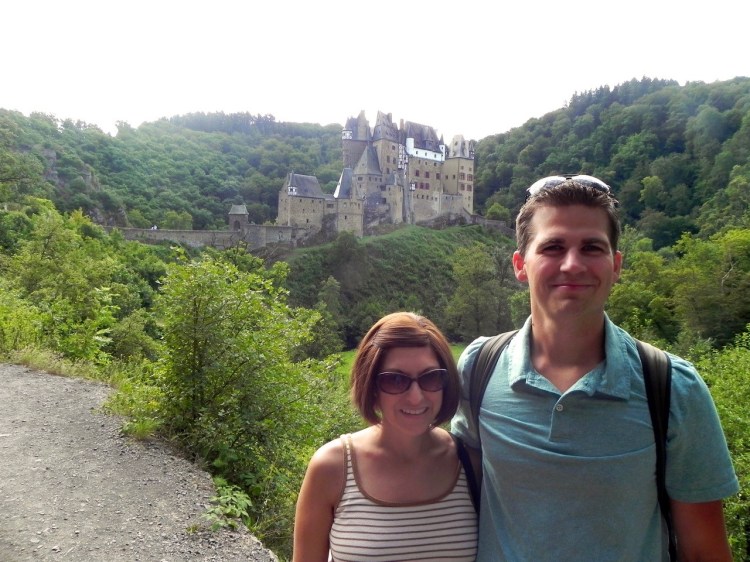
My wife and I are avid travelers, sightseers, and foodies. We love to get the most out of every trip without spending a fortune or wearing ourselves out. This is a work in progress…
Subscribe to My Blog
Get new content delivered directly to your inbox.
 M. J. Lau